Emergency Heat Match Program: Families Receiving Heat for the Winter

Posted on: January 6, 2017

Category Basic Needs | General

In 2016, 1,371 individuals in Georgia and Kentucky benefited from Americans Helping Americans® emergency utility assistance program.

Not only did it mean hundreds of senior citizens and families with young children down on their luck were able to stay warm in their home on the coldest days of winter without have to choose whether to pay their electric bill or put food on the table, it also meant that they would be able to continue to live in their homes.

What we have learned working with our partners over the years is that our emergency utility assistance program actually prevents homelessness.

They have told us of the critical importance of the program by explaining that even if the rent is paid in full, landlords will evict tenants who have their utilities cut off fearing that pipes on their properties could freeze and burst in unheated apartments, as well as the belief that if they could not pay their electric bill that month, they may not be able to pay their rent the next.

We have even also been informed that parents could lose temporary custody of their children as state human services agencies will not allow children to remain in a home without utilities, and will take them and put them in foster care until the situation is remedied.

For most Americans, the thought of losing their home, or worse, their children, because of an unpaid electric bill – frequently less than $100 – is unimaginable.

But it happens.

However, thanks to people like you, hundreds last year and thousands more over the past decade not only have been able to keep warm in winter, but had those fears eliminated as well.

Such is the case with Ellen.

For example last winter we heard Ellen’s tale of woe when Joe, her four-legged companion and best friend, got sick and she chose to take her dog to the vet and then couldn’t pay her power bill.

But thanks to emergency utility grant assistance provided by Americans Helping Americans® to our partner in Gainesville, Georgia, Caring Hands Ministries, she and her dog were saved from certain eviction.

Ellen knows what would’ve happened if she could not come up with the $37 to pay her bill in full.

“They’d put me out and stick me in a home someplace with my diabetes and my breathing,” she told us. “I know what would happen to Joe too – a sick old dog, they’d kill him. He would never be adopted.

“But me and Joe we need each other,” Ellen added. “He wakes me up mornings and he is the reason I do get up.

“You saved two lives when you helped me with that power bill,” she said. “Somebody does care ‘bout an old woman and her dog.”

And Ellen, and her best friend, Joe, are just one example of how people like you who support Americans Helping Americans® makes a difference in the lives of many less fortunate every single day.
Stay up to date with the latest news.

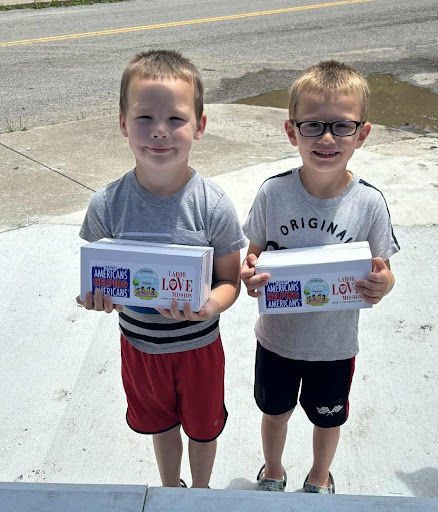
Two young boys smile while holding Americans Helping Americans food boxes.

Child Hunger in the U.S.: The Facts and How You Can Help

No child in America should have to worry about where their next meal will come from. Yet for millions of families, this uncertainty is a daily reality. Child hunger in […] Read More

Volunteers loading food boxes donated by Americans Helping Americans® into a car to support families in need.

Understanding Poverty in Kentucky: Causes and Solutions

Kentucky continues to face one of the highest poverty rates in the country, and the numbers tell a sobering story. According to the U.S. Census Bureau, the Kentucky poverty rate was 16.4% […] Read More

250 Years of Americans Helping Americans volunteer holding fresh fruit to support food security and hunger relief efforts in Appalachia

250 Years of Americans Helping Americans: Fighting Hunger in Appalachia One Food Box at a Time

Since 1776, Americans have relied on their relatives, neighbors, and friends, charitable organizations (such as Americans Helping Americans®), and their communities at large to help them through the challenges our […] Read More

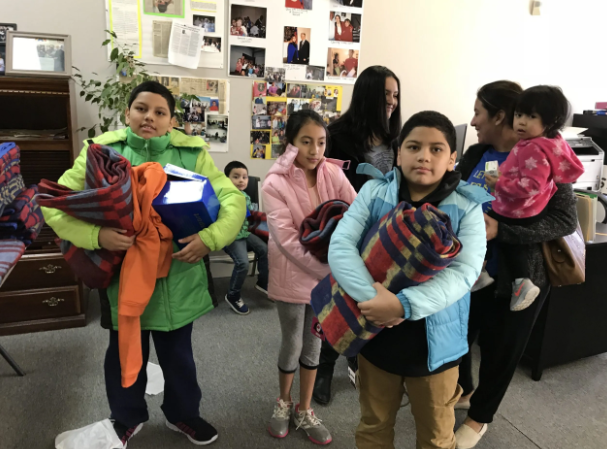
Children and families receive warm blankets and winter supplies at a community support center.

Why is There So Much Poverty in Georgia?

Georgia is one of the most economically diverse states in the nation, with booming metropolitan areas alongside deeply struggling rural communities. So many people wonder, is Georgia a poor state? […] Read More

Appalachia Tennessee: Where It Is, What It Means, and Which Counties Count

Appalachia is a widely used name for a multi-state region in the eastern United States, shaped by shared geography, history, and economic conditions. For official federal regional planning and data […] Read More

Understanding Poverty in Tennessee

Families across Tennessee continue to face the difficult realities of poverty. Rising costs of housing, food, and healthcare, combined with job losses and long-standing systemic issues, leave thousands struggling to […] Read More

Help Us Equip Appalachia Volunteers With the Tools Needed to Repair Homes

Benjamin Franklin is quoted as saying, “The best investment is in the tools of one’s own trade.” For Big Creek People in Action (BCPIA) in McDowell County, West Virginia, having […] Read More

Summer Camp Programs in Appalachia Support Children Beyond the School Year

This summer, thanks to the supporters of Americans Helping Americans®, we are once again able to support summer day camp programs in rural Kentucky and West Virginia, benefiting a projected […] Read More

Flood Recovery in McDowell County: Rebuilding Homes in Appalachia After Disaster

In February 2025, McDowell County, West Virginia, was hit once again with historic flooding following “the worst floods” of 1977, 2001, and again in 2002, reports The Appalachian Voice. “But […] Read More

Summer Hunger in Appalachia: How Food Programs Are Helping Children When School Is Out

Americans Helping Americans® is preparing now for the summer months, when thousands of children in Tennessee, Virginia, and Georgia will lose access to the school meals they rely on during […] Read More